Hey there, if you’ve ever looked at a lime production line online and thought, “Wait, this doesn’t quite fit what I actually need,” you’re not alone. I’ve been working as a lime production line supplier for over 10 years now, and that’s one of the first questions I get from new clients—way before they ask about price or shipping. “Can I customize this thing?” Let’s cut to the chase: yeah, you absolutely can. And honestly, it’s not some fancy, out-of-reach upgrade only big mining companies get. It’s what makes a production line work for you, not against you. Lime Production Line
Let me start with a quick story to prove it. A few years back, I met this guy named Raj who runs a small lime operation in rural India. He’d been buying pre-made lines for years, but every time he switched up his raw material—like going from limestone mined locally to a slightly purer batch he found 50km away—his line would clog or produce lumpy, inconsistent lime. He’d come to me frustrated, saying, “Your website says ‘customizable’ but all your lines look the same.” So we sat down and talked for two hours. Turns out he didn’t need a whole new line—he just needed to tweak two parts: the pre-crusher’s screen size (smaller holes for his finer limestone) and the kiln’s airflow settings (slower speed for his more fragile rock). That’s it. Now his production is up 18% and he barely deals with downtime anymore. That’s the kind of customization I’m talking about—not some overcomplicated, costly rework.
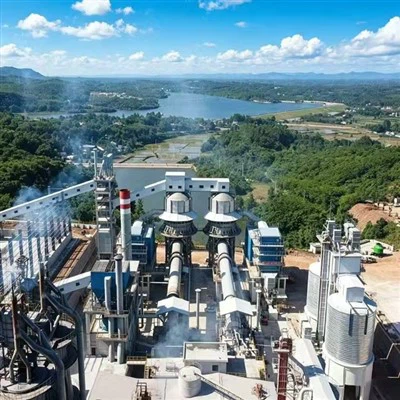
First, let’s break down what “customizing a lime production line” actually means, because a lot of people think it’s full replacement, and it’s not. Most lines are made of the same core parts: raw material handling (crushers, feeders), calcination (kilns, furnaces), refining (sifters, grinders), and packaging (baggers, bulk loaders). But the variables that change everything are your raw material, your output needs, your site space, and even local energy costs. So customization usually means tweaking these parts to match your exact situation, not building a line from scratch every time.
Let’s talk raw material first, because that’s the biggest one. Not all limestone is the same. Some is super hard, like the stuff used for construction, and needs a heavy-duty primary crusher. Other types are softer, maybe with more clay or impurities, so you need a pre-washer to get rid of gunk before it goes into the kiln. I had a client in Texas who mines limestone with a lot of moisture—like 12% moisture, which is way higher than the average. A standard line’s dryer couldn’t handle that, so we swapped out the standard rotary dryer for a faster, heat-efficient fluidized bed dryer that cuts down drying time by 25%. No one-size-fits-all dryer works for wet rock, right?
Then there’s calcination. That’s the part where you heat limestone to turn it into quicklime (CaO) or hydrated lime. If you need high-purity lime for things like water treatment or pharmaceutical use, you can’t have hot spots in the kiln—those cause uneven calcination, which means lime with inconsistent quality. So we can customize the kiln’s burner system to distribute heat more evenly, or even adjust the kiln’s length and diameter. For example, a client in Mexico needed a smaller kiln because their site only had 200 sqm of space, so we built a compact vertical kiln instead of a big horizontal rotary one. It still produces the same amount of lime, just fits in a tighter spot.
Output needs are another big custom angle. Some clients make 10 tons of lime a day for local farmers (to neutralize soil), others make 500 tons a day for steel mills. If you’re a small operation, you don’t need a huge, automated packaging line that fills 50kg bags at 100 bags a minute. That would be overkill and cost you way more. Instead, you can customize the packaging part to be manual or semi-automatic, perfect for smaller volumes. Or if you sell bulk lime to construction companies, we can skip the individual baggers entirely and add bulk loading chutes that load straight into trucks. I had a client in Kenya who switched from bagging to bulk, and we modified the output conveyor to connect directly to their truck loading dock—saved them so much time and material on packaging.
Wait, and let’s not forget about energy, because that’s a huge cost for any production line. A lot of places are trying to go greener now, so customization can include adding features that cut down on fuel use. For example, if you’re using natural gas, we can adjust the kiln’s combustion system to be more fuel-efficient, or switch to biogas if that’s what’s available locally. I worked with a client in Poland who runs their kiln on wood waste from nearby sawmills—we customized the burner to work with that lower-BTU fuel, which cut their energy costs by 40% and made their operation way more sustainable. No use a standard line that’s built for natural gas if you’ve got free wood waste lying around, right?
But here’s the thing I always tell new clients: customization doesn’t have to mean paying way more. A lot of people think “custom” equals “premium price tag,” but that’s not true. Most of the tweaks we do are modular, which means we can adjust existing parts instead of building new ones from scratch. For example, swapping a screen in a crusher costs way less than buying a whole new crusher. Adjusting a kiln’s airflow settings? We can often do that during installation or a quick on-site visit, no major rebuild needed.
Now, I know some of you are thinking, “But how do I make sure the custom line works? What if I get it wrong?” That’s a totally valid concern. Here’s how we make that easy: first, we do a free on-site audit (or a virtual one if you’re not local) to look at your space, your raw material, your current pain points. We take samples of your limestone, run tests in our lab to see exactly what it needs, then put together a custom plan that’s specific to you. No generic quotes, no pushing a line that’s not right for you. Then, during installation, our technicians come out to train your team on the tweaked parts—like how to adjust the new dryer settings or maintain the custom burner. I can’t tell you how many times a client has called me a month after installation saying, “This works way better than I thought it would,” because we took the time to listen to what they actually needed, not sell them a pre-built line.
Wait, let’s touch on a common mistake I see a lot. A client will say, “I need a production line that makes 20 tons a day,” but they forget to tell us that their raw material is softer, so actually they can make 25 tons with a few tweaks, or that they need lime that’s extra fine for paint production, so their grinder needs a higher mesh sieve. That’s why the audit is non-negotiable for us. We don’t just guess—we get the details right. Last year, a client in Brazil almost ordered a standard line that would have been too powerful for their small operation, just because they saw a similar line online. We caught that during the audit, tweaked the motor on the grinder to be smaller, and saved them $15k on the total cost. That’s the kind of value customization brings—saving you money, not spending it.
Another thing: what if you want to upgrade your line later? A lot of businesses grow, so your needs change. Modular customization means you can add parts down the line without replacing the whole thing. For example, if Raj (the guy from India I mentioned earlier) decides to scale up, we can add a second pre-crusher or upgrade his kiln’s motor instead of buying a whole new line. That’s a big plus—you don’t have to start over every time your business grows.
I get it, if you’ve never worked with a custom production line, it can feel overwhelming. You might worry about lead times, or if the parts will be compatible, or if you’ll get support when something goes wrong. Let me be straight with you: when you work with a supplier that actually does customization, lead times are just a little longer than a standard line—usually a week or two extra, because we’re building or adjusting parts for your specific needs. And compatibility? We build every part to work with the rest of the line, so you don’t have to worry about weird fitting issues. As for support, we’re there for you from the first consultation, through installation, and for as long as you own the line. I still get calls from clients I worked with 10 years ago, asking for a small tweak, and we always help them out.
Let me wrap this up with a quick takeaway: a lime production line is not a one-size-fits-all box. Your operation is unique—your raw material, your output goals, your space, your energy options, all that. So why would you use a line that’s built for someone else’s situation? Customization isn’t a luxury for big companies, it’s what makes your lime production efficient, profitable, and less of a headache. If you’re tired of dealing with a line that clogs, underperforms, or costs you more in energy than it should, stop settling for standard.

If you’re ready to talk about what you need, hit us up for a consultation. We’ll come to you (virtually or in person), test your material, walk through your space, and put together a plan that fits exactly what you’re after. No jargon, no pushy sales pitches, just someone who knows lime production and wants to make your life easier.
Straight Grate Pelletizing System References:
- Handbook of Lime Production: Processes, Technologies, and Applications, 2021, Industrial Press
- Industrial Mineral Processing: Customization and Optimization for Small to Medium Operations, 2022, Journal of Mining Engineering
- Energy Efficiency in Lime Calcination: Modular Design Approaches, 2023, International Journal of Sustainable Manufacturing
Handan Metallurgical Engineering & Research Co., Ltd.
Handan Metallurgical Engineering & Research Co., Ltd. is well-known as one of the leading lime production line manufacturers and suppliers in China. We warmly welcome you to buy high quality lime production line made in China here from our factory. Good service and competitive price are available.
Address: Cheng’an County, Handan City, Hebei Province, China
E-mail: hanhaizhao@dzmer.com
WebSite: https://www.dzmer.com/
