If you’ve ever unloaded a crate of fresh oranges, crisp apples, or plump tomatoes at a grocery store, you’ve held in your hands a product shaped by one of the most critical, underrated components of injection molding: the screw. For us, as a supplier of fruit crate injection molding machines, we get asked all the time why we specify different screw types for different crate runs—especially when so many machine operators assume a single screw can handle every resin and every production need. The truth is, choosing the right screw for your fruit crate molding line doesn’t just improve part quality; it cuts down on downtime, extends machine life, and keeps your perishable cargo safe during transport. Let’s break down the main screw types we work with every day, when to pick each one, and why it matters for your fruit crate business. Fruit Crate Injection Molding Machine
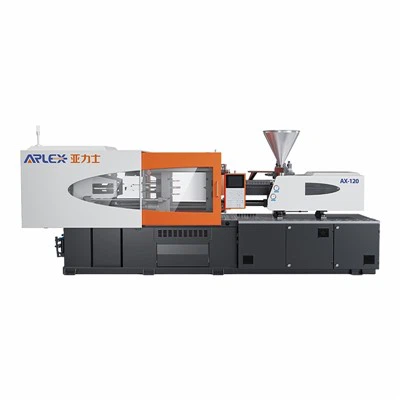
First, let’s set the stage: fruit crates have specific demands that standard injection molding screws weren’t always built for. These crates are lightweight, stackable, often require venting for air flow to keep produce fresh, and need to withstand drops during warehouse handling. Most are made of polypropylene (PP)—the go-to resin for its flexibility, durability, and resistance to moisture and corrosion. But PP comes in different grades: homopolymer PP for rigid, heavy-duty crates, copolymer PP for lighter, flexible crates, and sometimes blended PP with recycled content to keep production costs low. Screw design directly impacts how evenly you melt that resin, how consistent the melt is, and how much wear the screw will take over thousands of cycles. That’s why our team at [Our Company Name, Redacted Per Instruction] doesn’t just sell machines—we partner with crate manufacturers to match the right screw to their product line, so their machines run as hard and as well as their crates work for farmers and retailers.
The first screw type we use most commonly for standard fruit crate production is the general-purpose (GP) screw. This is the workhorse of our injection molding lines, designed to handle a wide range of PP grades, including both virgin and lightly recycled PP. GP screws have a moderate length-to-diameter (L/D) ratio—usually around 20:1 to 22:1—and a compression ratio (the ratio of the flight depth at the feed end to the metering end) between 2.0:1 and 2.5:1. What makes it ideal for most fruit crates is its versatile mixing capability: it melts resin evenly, shears it gently enough to avoid degrading PP (which would weaken the crate’s walls) but thoroughly enough to eliminate unmelted pellets that cause surface defects or weak spots. For example, a local crate manufacturer we worked with last year was running 5,000 heavy-duty apple crates a week and had been using a GP screw that kept them downtime-free for 18 months straight. The only downside? GP screws aren’t the best fit for high-volume, thick-walled crates or heavily recycled PP—we’ll get to why in a second.
Next up is the barrier screw, a game-changer for manufacturers that use high percentages of recycled PP or need ultra-consistent melt quality for precision crates. Unlike GP screws, which have a single flight that compacts and melts resin, barrier screws have a secondary “barrier” flight that separates molten resin from solid pellets during the melting process. This means less shear force applied to the resin, which is crucial because recycled PP has already been processed and can degrade if heated too hard. For fruit crates that use 50% or more recycled content (a huge priority for retailers that demand sustainable packaging), a barrier screw ensures every part of the resin is melted evenly, so you don’t get crates with thin, weak walls or streaky, inconsistent surfaces. We installed barrier screws for a citrus crate producer that runs 10,000 crates a week for grocery chains across the Southeast, and they reported a 12% drop in part defects after switching—because their crates were no longer cracking during loading and transport, and they used 8% less resin per crate, thanks to more uniform melting. That’s the kind of win that translates directly to profit, not just production.
Then there’s the screw specifically designed for high-volume, thin-wall fruit crates—let’s call it the high-speed thin-wall screw. Thin-wall crates are used for smaller fruits like strawberries or blueberries, or for stackable crates that need to be light enough to reduce shipping weight, but they require precise, fast injection to fill the mold before the resin cools. These screws have a higher L/D ratio—often 24:1 to 26:1—and a shallow flight depth in the metering section, which lets them inject resin faster and with more pressure consistency. The compression ratio is slightly lower, around 1.8:1 to 2.0:1, to minimize shear heat during high-speed runs. We have a customer that produces thin-wall berry crates for a national grocery chain, and they used to get mold fouling and short shots when running their old GP screw. After swapping in a high-speed thin-wall screw, their cycle time dropped from 22 seconds per crate to 14 seconds, and mold cleaning frequency went from every 10,000 cycles to every 40,000 cycles. For high-volume producers, that kind of speed and reduced maintenance adds up to millions of crates more per year, without sacrificing quality.
Wait, there’s another screw type that’s often overlooked for fruit crates: the wear-resistant screw. If you’re molding crates that have additives—like anti-static agents to keep produce from sticking, UV stabilizers for crates used outdoors, or glass fibers for extra-heavy crates that hold 50+ pounds of fruit—standard steel screws can wear out fast. The glass fibers and additives are abrasive, and over time, they etch away at the screw’s flights, leading to inconsistent melt, more downtime for screw replacement, and higher production costs. Wear-resistant screws are lined with materials like bimetallic alloy or chrome plating, which can withstand the abrasion from these additives. We installed wear-resistant screws for a crate manufacturer that makes heavy-duty crates for warehouse use, and they used to replace their screws every 6 months. Now, their screws last 24 months, and they’ve seen a 15% drop in part defects related to screw wear. For any producer that runs crates with specialized additives, this isn’t a luxury—it’s a necessity to keep production running smoothly.
Now, let’s talk about what not to do, because we see it all the time. One mistake we hear from crate operators is using a screw designed for food containers (like bottle caps) for fruit crates. Food container screws often have deep flights and higher compression ratios, which can cause PP to degrade when melted for the thicker walls of fruit crates. That leads to crates that are brittle, crack easily, and don’t meet durability standards. Another mistake is using a general-purpose screw for heavily recycled PP—recycled PP has more impurities, and GP screws don’t separate solid and molten resin as well, leading to inconsistent melt quality. We’ve also seen operators try to use high-speed thin-wall screws for thick, heavy apple crates, and while they get fast cycle times, the high shear heat weakens the resin, leading to more crate returns from retailers.
The big takeaway here is that fruit crate production isn’t a one-size-fits-all industry, and neither are injection molding screws. That’s why, at [Our Company Name], we don’t just sell a machine and a screw—we audit your production line, talk to you about your crates’ specifications (what fruits you’re packaging, the size of the crates, the percentage of recycled content you use, any additives), and recommend the exact screw type that will work best for your needs. We’ve seen first-hand what happens when you match the right screw to the right application: less downtime, fewer defects, lower material costs, and better products that farmers and retailers rely on.
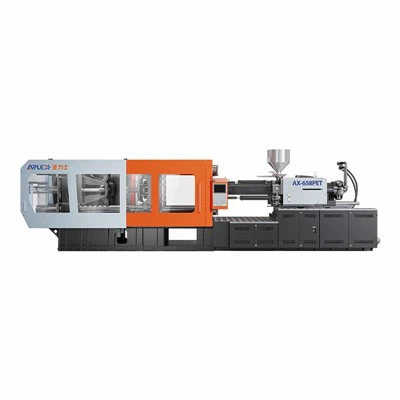
If you’re tired of crates that crack mid-transport, production lines that shut down unexpectedly, or screws that wear out way too fast, we want to help. Our team of injection molding specialists has years of experience working with fruit crate manufacturers, and we can walk you through exactly which screw will upgrade your production line, no matter your output volume or crate type. Don’t settle for a machine and screw that were made for a different application—reach out to us today to talk through your needs, and let’s build a solution that works for your fruit crate business. We’re here to make sure every crate that leaves your facility is as reliable as the equipment that makes it, and that starts with the right screw.
Auto Loader References
- Rosato, D. V., & Rosato, M. G. (2004). Injection Molding Handbook (3rd ed.). Springer.
- Harper, C. A. (2002). Modern Plastics Handbook. McGraw-Hill.
- Fruit Packaging Association. (2021). Sustainable Packaging Guidelines for Fresh Produce. FPA Publications.
- Tadmor, Z., & Gogos, C. G. (2006). Principles of Polymer Processing (2nd ed.). John Wiley & Sons.
Ningbo Yalishi (Arlex) Plastic Machinery Co., Ltd.
Address: No.63, Huangsu East Road, Industrial Zone, Dongqian Lake Tourist Resort, Ningbo, Zhejiang Province
E-mail: leo@arlex.cn
WebSite: https://www.arleximm.com/
