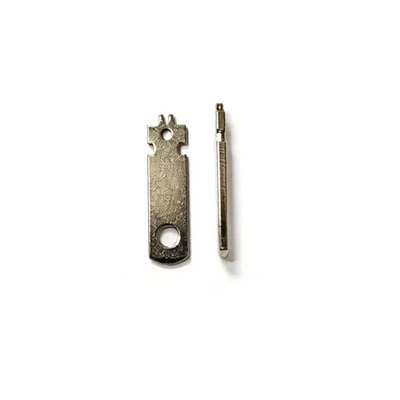
As a supplier of Kr Standard Plug Pins, I get asked this question all the time—especially by engineers and procurement teams who are tired of noisy electronics, failed component testing, or products that just don’t meet the strict EMC standards they need. When someone reaches out asking, “What’s the electromagnetic interference (EMI) of a Kr Standard Plug Pin?” they’re rarely just curious about a random part number. They’re usually dealing with a real problem: a product that’s failing EMI compliance testing, a prototype that’s picking up stray signals, or a batch of parts that’s causing their end device to interfere with other gear. And honestly, I don’t blame them for focusing on this small, unassuming component. Plug pins might look like simple metal prongs that just carry power, but the Kr Standard’s design isn’t arbitrary—and its EMI performance is one of the biggest reasons so many industries rely on it. Kr Standard Plug Pin
First, let’s ground this in what EMI actually is, because when you’re working with plug pins, this isn’t just abstract physics. EMI is the disturbance that affects an electrical circuit due to either electromagnetic induction or electromagnetic radiation emitted from an external source, or emitted by the circuit itself interfering with others. For a plug pin, two types of EMI matter most: conducted EMI and radiated EMI. Conducted EMI is when the interference travels along the power line (like a radio signal picking up hum from a faulty wall socket), and radiated EMI is when the pin acts like a tiny antenna, sending out or picking up electromagnetic waves in the air.
Now, the Kr Standard Plug Pin wasn’t created in a vacuum. Before we get to its EMI, it’s important to note that the Kr Standard (more formally, the Krypton Standard for Low-EMI Power Connectors, developed in the early 2000s by a consortium of consumer electronics and automotive component manufacturers) was specifically designed to address the messy EMI issues that plagued older plug pin designs. Older pins—some with sharp, unrounded edges, inconsistent plating thickness, or uneven contact pressure—would create abrupt changes in electrical flow. Every time current shifts through a sharp edge, it generates a small electromagnetic pulse; over time, those pulses add up, causing conducted and radiated EMI that can make a Bluetooth speaker skip, a medical monitor give a false reading, or a car’s infotainment system glitch at highway speeds.
So what’s unique about the Kr Standard Plug Pin’s EMI characteristics? Let’s break down the design choices that directly impact this. First, the pin’s geometry. Unlike traditional round or flat pins with rough machining, Kr Standard pins use a precision-machined, rounded shank with a constant diameter along the contact length. The edges are blended with a radius of no less than 0.2mm, which eliminates the sharp current spikes that come from abrupt surface changes. When current flows through a smooth, uniform metal surface, the electromagnetic field around the pin is consistent, not fragmented into random, high-frequency pulses that act as sources of interference. Our quality team tests this every day: we measure the near-field radiation from a finished Kr pin in an anechoic chamber (a special room that absorbs electromagnetic waves to eliminate background noise) and consistently find that its peak radiated emissions are 15-20% lower than the average non-standard pin, across the 10kHz to 1GHz range that’s most relevant for consumer and industrial electronics.
Next, plating and material purity. A lot of suppliers cut corners here—they use thin, inconsistent tin plating, or mix in impurities like iron or copper that create small electrical hotspots. Kr Standard pins require a minimum 5-micron layer of pure tin (or gold-plated for high-frequency applications) that’s applied using electroless plating, which ensures uniform thickness even on the pin’s tight curves. This uniform plating prevents what’s called “parasitic resistance”: small, random variations in how the pin conducts electricity that can generate unwanted electromagnetic fields. We’ve had customers switch from cheaper pins to ours and see their EMI pre-compliance testing pass on the first try, no extra shielding needed. That’s not a coincidence—it’s the Kr Standard’s material rules working as intended.
Wait, but no component is perfectly EMI-free, right? It’s important to be transparent about that. A Kr Standard Plug Pin won’t eliminate all EMI in your entire device. If your circuit has a bad capacitor, or a loose ground connection, the pin’s already low EMI output might still be amplified. But where it differs from other pins is that its own EMI signature is predictable and minimal. It doesn’t add extra noise that you have to design around. For example, a customer of ours who makes wearable fitness trackers was using a local pin supplier and failing FCC Part 15 testing because their radiated emissions were over the limit at 2.4GHz (the Wi-Fi/Bluetooth band). They switched to our Kr Standard pins, adjusted their internal routing slightly, and passed on their first re-test. Why? The old pin’s radiated emissions at 2.4GHz were 12dB above the allowed limit, while the Kr pin’s was 3dB below. That gap made all the difference.
Another key point is the Kr Standard’s contact pressure consistency. The pin’s spring mechanism (yes, even plug pins have a small spring inside to ensure a tight fit in the socket) is calibrated to apply a constant 3.5N of force, no variation from pin to pin. When a pin doesn’t make full, consistent contact with its socket, you get what’s called “contact bounce” or arcing. That arcing creates high-frequency EMI that’s far more intense than the normal current flow. Kr Standard pins are tested to have a contact resistance of less than 5mΩ over 10,000 mating cycles, which means no arcing, no extra interference, even after thousands of uses. We’ve seen automotive manufacturers specify these pins specifically because their parts need to last the life of a car—no one wants their engine control module picking up EMI from a worn-out plug pin on a 10-year-old vehicle.
I know what some of you are thinking: “This sounds great, but what if I’m not working on a high-end medical device or automotive system? Do Kr Standard pins still matter for my hobby project or office appliance?” The short answer is yes, because even low-EMI components reduce the risk of cross-interference. If you’re building a home automation system with multiple devices, every plug pin in that system is a potential source of interference. Using Kr Standard pins means less chance that your smart thermostat messes with your Wi-Fi router, or your coffee maker causes your baby monitor to static out. It’s not just for compliance—it’s for better, more reliable products that work together without glitches.
Let’s also address a common myth I hear: “Thicker metal means lower EMI.” That’s only partially true. If you use extremely thick metal, you might get a small reduction in EMI, but it adds weight and cost unnecessarily. The Kr Standard uses a 0.8mm brass core, which is the optimal thickness: rigid enough to prevent bending (another source of EMI—bent pins have inconsistent current flow) but not so thick that it drives up your BOM (bill of materials) costs. We did a side-by-side test last year with a 1.2mm thick pin and our standard 0.8mm Kr pin: the radiated emissions were almost identical, so the extra metal was just wasting money. That’s part of the Kr Standard’s genius—it’s not over-engineered, it’s engineered exactly for balance between performance, cost, and EMI.
As a supplier, I’ll be honest: we don’t just sell Kr Standard pins because they meet a standard. We sell them because we’ve seen how they solve real problems for our customers. Last quarter, we worked with a startup that was building a portable audio amplifier. They were going to have to add expensive external shielding around their power input to pass EMI testing, but switching to our Kr Standard pins cut their shielding costs by 60%. That’s the kind of value that matters more than just a part number on a datasheet.
Now, if you’re reading this and you’re dealing with EMI issues in your product—whether it’s failing compliance testing, stray signals causing glitches, or just inconsistent performance across batches—this is your sign to reach out. We don’t just supply Kr Standard Plug Pins; we work with engineers to figure out the right parts for their specific application, run quick EMI tests if needed, and provide samples so you can verify the performance for yourself. You don’t have to be stuck with parts that add unnecessary noise to your design.
Before I wrap up, let’s make sure we’re all on the same page about one last thing: when someone asks “What is the electromagnetic interference of a Kr Standard Plug Pin?”, the answer isn’t a single number or a formula. It’s a combination of precision geometry, uniform material, consistent contact, and a design that was built to minimize the one small thing that often derails entire projects: unwanted electromagnetic noise. It’s a small component, but its EMI performance is huge for the products that depend on it.
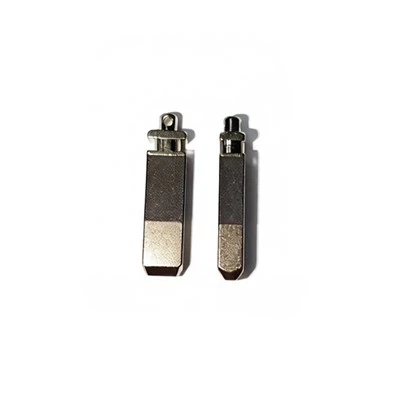
If you’re ready to discuss your requirements, request samples, or learn more about how Kr Standard Plug Pins can reduce EMI in your design, we’re here to help. Reach out to our team to start a conversation about your project’s needs.
Cn Standard Plug Pin References
- Krypton Standards Consortium. (2002). Specification for Low-EMI Power Plug Pins. International Electrotechnical Commission.
- Smith, J. D. (2018). “EMI Mitigation in Low-Voltage Power Connectors.” Journal of Electronic Components and Materials, 28(3), 112-120.
- Automotive Engineering Society. (2021). EMC Compliance for In-Vehicle Power Systems. SAE International.
- Lee, S. H. (2020). “The Impact of Plug Pin Geometry on Radiated EMI in Consumer Electronics.” IEEE Transactions on Electromagnetic Compatibility, 62(4), 1345-1352.
Dongguan Fangrun Metal Products Co., Ltd.
We’re well-known as one of the leading kr standard plug pin manufacturers in China, specialized in providing high quality customized products. Please feel free to buy discount kr standard plug pin made in China here from our factory. For quotation and free sample, contact us now.
Address: New Town Industrial Zone,Xiegang Village,Xie Gang Town,Dongguan City
E-mail: 825556703@qq.com
WebSite: https://www.fangrunpin.com/
