If you’ve ever watched a baker combine flour, yeast, and sugar, or a pharmaceutical tech blend powders for a tablet, you’ve seen a powder mixer at work. But beyond the simple motion of stirring dry ingredients, a high-quality powder mixer is a finely engineered piece of equipment, built with specific design features that make the difference between a consistent, usable mix and a batch that’s lumpy, uneven, or unsafe for its intended purpose. As a powder mixer supplier, I’ve spent years working with manufacturers across industries, and I’ve learned that the best mixers don’t just “mix”—they do it reliably, efficiently, and in a way that protects both the product and the equipment itself. Today, I want to break down the key design features that set a professional powder mixer apart, based on what I’ve seen our clients need time and time again. Powder Mixer
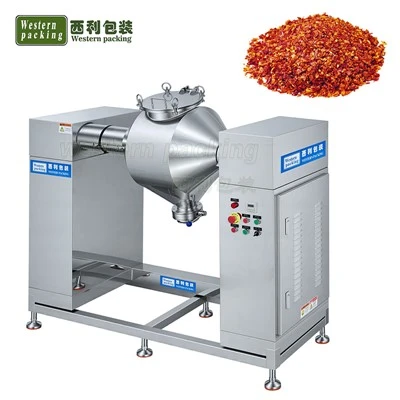
First, let’s talk about the mixing chamber, the core part of any powder mixer. The chamber isn’t just a empty metal box to hold ingredients; its shape and surface design have a huge impact on mix quality. For most general-purpose powder mixing, a U-shaped trough is the industry standard, and for good reason. The curved base of a U-trough creates two distinct material flow patterns as the mixer operates: as the agitator rotates, powder is pushed up one side of the curve, slides over the top, and falls down the other side, creating a continuous, gentle circulation that avoids the kind of shear that can break down delicate materials. That’s critical for industries like cosmetics or food, where you might mix fine powders like cocoa or mica that can clump or degrade if handled too roughly. For clients working with larger batches or heavier, more abrasive materials—like powdered metal or mineral fillers—we also offer conical screw mixers, which have a tapered cone-shaped chamber that forces powder to rise along the walls, flow down the center, and create a three-dimensional mixing action. The cone shape eliminates dead spots, which are small areas where powder can get stuck and never get properly blended; dead spots are a common flaw in cheap mixers, and they lead to batch inconsistency that can ruin products.
Beyond shape, the chamber’s surface finish is non-negotiable, especially for regulated industries like pharmaceuticals or food and beverage. The interior of the chamber has to be smooth enough to prevent powder from adhering, but not so smooth that it causes ingredients to slip instead of mixing. We use 316L stainless steel for all our mixer chambers, a grade that’s resistant to corrosion from acidic or salty powders, easy to sanitize, and has a Ra (roughness average) finish of less than 0.8 micrometers for all food and pharma models. That smooth, polished surface means less cross-contamination when switching between batches—something that’s required for clients that make multiple products in the same mixer, like a snack manufacturer that switches from wheat flour to almond flour. For clients working with highly sensitive materials, we also offer electropolished chambers, which go a step further by removing tiny metal particles from the surface, so there’s no risk of metal contamination. A lot of budget mixers use lower-grade stainless steel or even painted surfaces, which can chip, collect powder in small cracks, and be impossible to fully sanitize—we see those mixers fail all the time, especially when a regulatory audit is around the corner.
Next up is the agitator system, the part that actually moves the powder. Agitators come in different designs for different applications, and matching the right agitator to your powder type is the key to good mixing. The most common agitator for U-trough mixers is the double ribbon agitator, which is exactly what it sounds like: two sets of spiraled metal ribbons, one outer and one inner, fixed to a central shaft. The outer ribbon pushes powder toward the ends of the trough, while the inner ribbon pushes powder back toward the center. That dual action ensures every part of the batch is moving, not just the middle. For fine, cohesive powders that tend to clump—like powdered detergent or pharmaceutical excipients—we add a high-speed chopper blade to the agitator system. The chopper runs at 10 to 20 times the speed of the main agitator, and it’s designed to break up clumps without applying too much force. I remember a client who made protein powder a few years back was having constant issues with lumps in their final product; they were using a cheap mixer without a chopper, so the clumps of whey concentrate never fully broke down. Once we swapped in our model with the optional chopper, their lumps dropped by 98%, and their product complaints vanished.
For conical mixers, the agitator is a vertical screw that rotates around the inside of the cone, lifting powder up the walls before it falls back down. For powders that are very dense or tend to segregate—like powdered cement or metal powders—we add a secondary impeller at the base of the cone, which breaks up any powder that’s settled at the bottom, where gravity can cause heavy particles to sink. The biggest design mistake we see with cheap agitators is underpowered motors or flimsy shafts. A small, weak motor can’t handle the load of a full batch of powder, especially heavy or dense ones, which leads to slow mixing times, uneven blends, and even motor burnout. All our mixers use variable frequency drives (VFDs) for the main agitator, which let us adjust the speed of the agitator to match the powder type and batch size. That flexibility is huge: a speed that works for light talcum powder will be too fast for dense metal powder, and the VFD lets us fine-tune it to avoid segregation or clumping.
Another often-overlooked design feature is the discharge mechanism, because a mixer that can’t empty quickly and completely is useless, no matter how well it mixes. The discharge has to be positioned low enough at the bottom of the chamber to eliminate residual powder—another dead spot that can cause cross-contamination between batches. The most reliable discharge for most applications is a pneumatically operated slide gate, which is controlled by compressed air to open and close smoothly, without creating dust or jamming. We’ve tested manual discharge gates on older models, and they’re fine for small, low-volume jobs, but for large batches in food or pharma, manual gates are inconsistent; it’s hard to open them the exact same way every time, which can leave small amounts of powder behind. For clients working with very fine, dusty powders that can escape during discharge, we also offer dust-tight discharge seals, which prevent powder loss and keep the work area clean. A lot of cheap mixers use flimsy discharge gates that leak dust, which not only creates a safety hazard for workers (in industries where fine powder can be explosive, that’s a major risk) but also leads to lost product and inconsistent batch weights. I once worked with a small coffee roaster that was using a used mixer from a surplus seller; their discharge gate was so worn that they lost 5-10 pounds of coffee powder every batch, adding up to thousands of dollars in lost revenue each year. Swapping to a new mixer with a properly sealed discharge fixed that problem instantly.
Sanitation and safety features are also non-negotiable, especially for regulated industries. For food and pharma clients, our mixers are designed with CIP (clean-in-place) compatibility, which means they can be cleaned without disassembling any parts. CIP systems use high-pressure water and sanitizing solution sprayed directly into the chamber, and the design of our chambers and agitators means there are no hard-to-reach corners where bacteria or powder can get trapped. That cuts down on cleaning time from hours to minutes, which is a huge efficiency boost for manufacturers who need to switch between products quickly. Safety is another big one: all our mixers have interlocks on the chamber doors, so the agitator can’t start if the door is open, and emergency stop buttons positioned at multiple points around the machine. We also design all wiring and control panels to be splash-resistant, so they can handle occasional spills from powder or cleaning solution. Budget mixers often skip these safety features to cut costs, which can lead to workplace accidents or compliance fines.
Wait, there’s one more feature that I think sets professional mixers apart from the rest: material handling flexibility. A good powder mixer should be able to handle multiple batch sizes, not just one specific volume. That’s why we design our chambers with a usable volume range, typically 20-80% of the total chamber capacity. For example, a mixer with a 100 cubic foot chamber works great for batches as small as 20 cubic feet and as large as 80 cubic feet, which means clients don’t need a separate mixer for small test batches and large production runs. We also offer optional jackets on the chamber, for clients that need to control temperature during mixing. A jacket can heat or cool the powder, which is critical for products like candle wax powder, or certain pharmaceuticals that need to stay at a specific temperature to avoid degradation. A lot of cheaper mixers don’t offer jacket options, so clients have to invest in extra equipment if they need temperature control, which adds unnecessary costs.
I’ve spent over a decade working with powder mixers, and I’ve seen first-hand how the right design can transform a manufacturing process. It’s not just about having a machine that spins; it’s about the shape of the chamber, the design of the agitator, the quality of the surface finish, the reliability of the discharge, and the safety and sanitation features that fit your industry’s needs. Too many buyers make the mistake of choosing a mixer based on price alone, only to deal with lumpy batches, cross-contamination, safety risks, and lost productivity down the line. If you’re in the market for a powder mixer, take the time to ask about these key design features, because they’re the ones that will make or break your product quality and your bottom line.
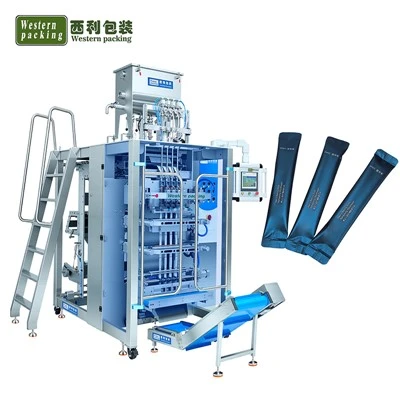
If you’re looking for a mixer that’s built with these reliable, industry-focused design features, we’re here to help. Our team works with clients across food, pharmaceutical, chemical, cosmetic, and construction industries to match the right mixer to your specific powder types, batch sizes, and production needs. We offer customizations for temperature control, CIP compatibility, and special discharge options, and all our mixers are built to meet global regulatory standards. Whether you’re a small business testing a new product or a large manufacturer scaling up production, we can walk you through our options, answer your questions, and help you find the perfect powder mixer for your operations. Don’t settle for a budget mixer that will lead to headaches down the line—reach out today to start the conversation about your powder mixing needs.
Powder Packaging Machine References
- Ashby, M. F., & Jones, D. R. H. (2012). Engineering Materials 2: An Introduction to Microstructures, Processing and Design. Butterworth-Heinemann.
- Food and Drug Administration. (2022). Current Good Manufacturing Practice (CGMP) for Finished Pharmaceuticals. U.S. Department of Health and Human Services.
- Potts, G. R. (2019). Powder Mixing: Theory and Practice. CRC Press.
- Occupational Safety and Health Administration. (2021). Combustible Dust Standards. U.S. Department of Labor.
- Smith, P. (2020). Stainless Steel for Pharmaceutical and Food Equipment Design. Journal of Food Processing and Engineering, 43(8), e13421.
Guangzhou Western Packing Co., Limited
Guangzhou Western Packing Co., Limited is one of the most professional powder mixer manufacturers and suppliers in China, also supports custom service. With abundant experience, we warmly welcome you to wholesale durable powder mixer at competitive price from our factory.
Address: No.3, Yilong street, Wulonggang, Zhongluotan Twon, Baiyun District, Guangzhou
E-mail: david@westernpacking.com
WebSite: https://www.westernpackingusa.com/
