Let me cut to the chase—if you’ve ever stood in a traditional cathedral, a modern parish sanctuary, or a small community church and heard that echo of your voice bouncing off stone, wood, and glass long after you finish speaking, you’ve felt the problem these spaces have struggled with for centuries. As a sound-absorbing materials supplier who’s worked with faith communities across North America and Europe for the past 12 years, I’ve seen firsthand how churches—old and new—are ditching the myth that “reverberation equals spirituality” and choosing practical, respectful acoustic solutions that honor both worship and the people attending services, youth groups, and weddings. Today, I want to break down exactly what sound-absorbing materials churches actually use, why they work for these unique spaces, and what you need to know if you’re looking to update your own. Sound-absorbing Materials

First, let’s ground this in why churches are such tricky acoustic spaces. For centuries, builders used heavy, hard materials like limestone, sandstone, thick plaster, and high-gloss hardwood to create spaces that felt grand and timeless. The upside? They’re durable, easy to clean for weekly services, and have a warm, natural tone for hymns or organ music. The downside? All those hard surfaces reflect sound like a mirror reflects light, creating reverberation times (the time it takes for sound to die down after being produced) that can stretch to 8 seconds or longer in large cathedrals. For comparison, a good classroom has a reverberation time of 0.6 to 0.8 seconds; a church that’s 500+ years old can have twice that, making it hard for a congregation to follow a sermon, hear a prayer leader, or sing in tune. That’s where sound-absorbing materials come in—but they can’t just be any foam you find at a hardware store. Churches need materials that fit their aesthetic, are fire-safe for crowded public spaces, don’t trap dust that’s common in old stone buildings, and respect the spiritual atmosphere of the space.
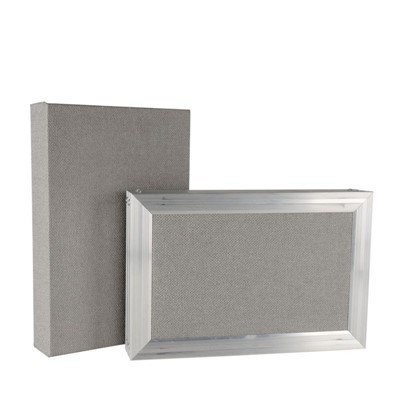
Let’s start with the most widely used material in churches today: acoustic fabric-wrapped fiberglass panels. I know what some of you are thinking—fiberglass sounds industrial, but modern versions are anything but ugly, and they’re the workhorse of church acoustic projects for three big reasons. First, they’re extremely effective at absorbing mid and high frequencies, which are the ones that make speech sound muddled. The core is made of dense, fused fiberglass that’s been tested to have a Noise Reduction Coefficient (NRC) of 0.85 or higher—meaning it absorbs 85% of the sound that hits it, only reflecting 15%. For context, a typical unpolished concrete wall has an NRC of 0.05, so fiberglass panels are 17x better at cutting down echoes. Second, they’re customizable. Our team works with dozens of churches to match fabric colors to existing pews, altar cloths, or stained glass—we’ve even wrapped panels in custom fabric that matches the exact hue of a sanctuary’s oak trim. We cut them to fit the shape of a vaulted ceiling, the curve of a balcony, or to fit seamlessly between stone arches so they look like part of the original design, not a patch. Third, they’re low-maintenance. For old churches with dusty air from stone floors and open windows, fiberglass panels can be vacuumed gently with a soft brush attachment, and the fabric wipes clean with a mild detergent—no replacing them every few years. I’ll be honest: there’s a common myth that fiberglass is bad for indoor air quality, but modern formaldehyde-free versions, which we exclusively supply, meet all US and European standards for public occupancy, so they’re safe for kids, elderly congregants, and anyone with respiratory sensitivities.
Next up, porous mineral wool panels, which are a favorite for churches that need to tackle low-frequency rumble too. Here’s the thing about large stone churches: not only do they have echo, but they also vibrate, creating a low, throbbing hum that makes it hard to follow a sermon, especially in the back pews. That’s where mineral wool shines. Made from spun volcanic rock or recycled slag from steel mills, these panels are denser than fiberglass, so they absorb low frequencies (think the deep notes of an organ, or the rumble of a choir’s bass voices) much better. Their NRC is usually around 0.9, and they also have a higher Sound Transmission Class (STC) rating, which means they block sound from outside—like traffic, lawn mowers, or construction, which is a huge plus for churches located in busy downtown areas or near residential streets. We’ve installed mineral wool panels in a 1920s brick church in Chicago that’s located right next to a L train line; before the panels, the rumble was so bad that half the congregation couldn’t hear the pastor during evening services. After installation, the reverberation time dropped from 7.2 seconds to 2.1 seconds, and the train rumble was barely noticeable. The only catch with mineral wool is that it doesn’t look as sleek as fabric-wrapped fiberglass on its own, so most churches wrap it in a thin, breathable fabric that blends with their decor—linen blends, canvas, or even custom-dyed fabric to match sanctuary tones. It’s also fire-resistant, which is non-negotiable for churches that have large gatherings of 500+ people, and it doesn’t off-gas, so it’s safe for indoor air.
For churches that don’t want to add wall panels at all (maybe they have a historic interior that’s protected by landmark laws, so they can’t modify the walls), there are two other popular options: acoustic ceiling clouds and perforated wood slats. Ceiling clouds are exactly what they sound like: large, lightweight panels hung from the ceiling, usually in clusters, that hang 1 to 3 feet below the ceiling, where they intercept sound before it can bounce back down to the congregation. They’re perfect for high, vaulted ceilings, which are the worst for reverberation because sound has so much space to bounce around. We’ve worked with a 14th-century Gothic cathedral in the UK that’s a Grade I listed building, so they couldn’t drill into the stone walls. Instead, we installed custom-size fabric-wrapped ceiling clouds, shaped to match the cathedral’s ribbed vaults, so they looked like part of the original design. The result? Their reverberation time dropped from 9 seconds to 2.5 seconds, and sermons were finally understandable from the back of the nave without needing to install microphones for every speaker. The key here is that ceiling clouds shouldn’t be too big or too numerous—too many, and you’ll make the space feel small and cramped, which is the opposite of the grand, spiritual feeling churches want. Most churches use between 20% and 30% of the ceiling space for clouds, which is enough to cut echoes without changing the vibe.
Perforated wood slats, on the other hand, are great for modern churches and churches that want to keep the warm, natural wooden aesthetic without hard, reflective surfaces. These slats are made from solid oak, pine, or walnut, with small, evenly spaced holes drilled through them, backed by a layer of sound-absorbing core (usually fiberglass or mineral wool). The holes let sound pass through the wood and get absorbed by the core, while the wood on top keeps the natural look that so many churches love. We installed these in a new megachurch in Texas that wanted a rustic, barn-like sanctuary with exposed wooden beams; before, they had a reverberation time of 8.5 seconds, so congregants were leaving services complaining they couldn’t hear the sermon. After installing perforated wood slats on the side walls and ceiling, their reverberation time dropped to 2.2 seconds, and the wood still looked like it was part of their original design—no one visiting noticed the acoustic panels at all. The only thing to note here is that perforated wood slats need to be installed with a small air gap between the slat and the core to work effectively; if they’re mounted too tightly, the sound can’t get through the holes to the core, so they don’t absorb sound.
Now, let’s talk about what you should avoid when choosing sound-absorbing materials for your church. First, generic foam panels from big-box stores—those have an NRC of around 0.4, which is barely better than plaster, and they’re made from toxic chemicals that off-gas, which is a problem for crowded indoor spaces. Second, materials that are too flimsy or not fire-rated. Churches can’t use any material that doesn’t meet National Fire Protection Association (NFPA) 701 standards for flame resistance, because if a fire breaks out, you need every part of the building to slow it down. Third, materials that are too “in your face.” I’ve had several clients come to me after buying ugly, neon-colored acoustic panels that made their sanctuary look like a gymnasium, and they had to rip them out and start over. The best sound-absorbing materials for churches are invisible—they do their job, and no one notices they’re there, because they match the space.
I’ve been in this industry long enough to know that updating a church’s acoustics isn’t just a renovation project—it’s about helping a community feel connected. When a congregation can hear the sermon, when the choir sounds warm and balanced, when you can sing a hymn without straining to hear the person next to you, that makes a huge difference. I recently worked with a small rural church in Ohio that had a reverberation time of 9 seconds, so during Sunday services, the preacher’s voice sounded like a mumble. They were a tiny congregation of 80 people, so they couldn’t afford a big renovation. We installed 12 custom fabric-wrapped fiberglass panels, each 4×8 feet, wrapped in a neutral beige fabric that matched their existing pews, for less than $5,000. Six months later, the pastor told me that for the first time in 30 years, every single person in the congregation could hear his sermon clearly from the back of the church, and people were coming back to services because they didn’t feel like they were missing out. That’s why I do this work—it’s not just about selling materials, it’s about helping communities thrive.
If you’re a church leader, facilities manager, or worship team member who’s dealing with echo, muddled sermons, or a worship space that doesn’t feel functional for your congregation, I’d encourage you to reach out. We don’t just sell sound-absorbing materials—we work with you to assess your space, recommend the right materials that fit your historic or aesthetic requirements, and install them in a way that honors your church’s unique history and spiritual purpose. There’s no one-size-fits-all solution, but there is a solution that works for every church, no matter how old or new, how big or small.
Sound-absorbing Materials References:
- Beranek, L. L., & Vér, I. L. (2006). Noise and Vibration Control Engineering: Principles and Applications. John Wiley & Sons.
- Acoustical Society of America. (2018). Architectural Acoustics for Religious Spaces. Journal of the Acoustical Society of America, 144(3), 1723-1745.
- National Fire Protection Association. (2021). NFPA 701: Standard Methods of Fire Tests for Flame Propagation of Textiles and Films. National Fire Protection Association.
- International Society of Acoustics. (2020). Acoustic Design for Sacred Spaces: Balancing Spirituality and Function. Acta Acustica United with Acustica, 106(4), 589-602.
Guangzhou MQ Acoustic Materials Co., Ltd.
Guangzhou MQ Acoustic Materials Co., Ltd. is one of the most professional sound-absorbing materials manufacturers and suppliers in China, featured by quality products and low price. Welcome to buy CE approved sound-absorbing materials in stock here and get quotation from our factory. We also accept customized orders.
Address: Room D403, KeZhu Business Building, ZhuJi Road, TianHe District, GuangZhou, China
E-mail: Lizzy@mq-acoustics.com
WebSite: https://www.acoustic-projects.com/
