If you’ve ever stopped to wonder why a standard off-the-shelf part doesn’t fit your exact machine, process, or project, you’ve bumped up against the limits of “one-size-fits-all” hardware. As a custom hardware supplier, I talk to people in manufacturing, aerospace, medical device development, and even small-scale industrial operations every day who hit this wall. They’re working on something that needs to perform in a specific space, hold a unique load, or interact with a very particular material—and no part you can grab from a distributor shelf is going to get the job done right. That’s where custom hardware steps in, and it’s not just a luxury for big corporations or rocket scientists. It’s a solution designed around your exact needs, built to work the way you need it to, no compromises. Custom Hardware
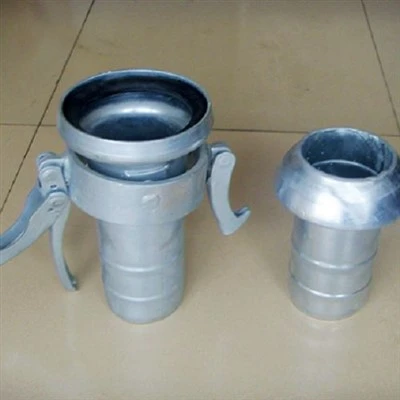
Let’s start by clearing up a common misconception: custom hardware isn’t just “making a part to order.” I’ve had people call me saying, “I need a bolt that’s an inch longer than the standard one” and think that’s custom, but that’s a quick modification—something we can do, sure, but true custom hardware is more intentional and integrated. It’s the entire system of components, fasteners, fittings, or structural parts engineered from the ground up for a specific application, not adapted from an existing catalog. For example, a medical device manufacturer building a new surgical robot might need a tiny, lightweight hinge that can rotate thousands of times without wear, fit into a space smaller than a dime, and be resistant to sterilization chemicals. No standard hinge on the market hits all those marks. So we work with their engineering team to design every detail: the material (maybe a high-grade titanium alloy that’s strong but lightweight), the lubrication method (dry film to avoid contaminating the sterile device), the tolerances (measured in micrometers, not fractions of an inch, to ensure smooth movement). That’s custom hardware. It’s solving a problem that doesn’t have an off-the-shelf answer, not just changing a dimension.
What makes custom hardware different from stock parts boils down to three core things: flexibility, performance, and compatibility. Stock parts are built for mass production, so they have to work for a wide range of uses, which means they’re a jack-of-all-trades but master of none. A standard steel bolt will hold a shelf together just fine, but if you need one that won’t corrode in a saltwater environment, won’t expand and contract with extreme temperature swings, or won’t vibrate loose in a moving vehicle, the stock option might not cut it. Custom hardware lets you choose every variable: material, finish, shape, size, even the way parts are assembled. For a farm equipment company, that might mean building a heavy-duty hitch pin that’s shaped to fit only their specific tractor model, so it locks securely and eliminates the risk of it slipping off during use. For a food processing plant, that could mean a custom conveyor bracket made of a stainless steel alloy that resists bacteria and stands up to high-pressure washdowns—something no generic bracket can match.
Performance is the next big difference. When you use a stock part, you’re accepting the performance that the manufacturer designed it for. If that part fails, you might lose time, money, or even safety. Custom hardware is tested specifically for your application, so you know it will meet your exact performance requirements. Last year, I worked with a renewable energy company that was building a new wind turbine blade monitoring system. They needed a small, rigid mounting bracket that could hold a sensor on the curved, rotating edge of the blade, withstand wind speeds up to 150 mph, and not add extra weight that would reduce the turbine’s efficiency. The stock brackets they tried were too flimsy, too heavy, or didn’t fit the blade’s curved surface. We designed a custom bracket using a high-strength, lightweight aluminum alloy, shaped to match the blade’s curve precisely, and tested it in our in-house wind tunnel to make sure it would hold up. That bracket isn’t used anywhere else—it was built for their turbine, and their turbine alone. That’s the performance benefit of custom hardware: no guesswork, no over-engineering, no under-engineering. It’s exactly what you need to get the job done.
Compatibility is often the hidden benefit of custom hardware. When you have a whole system of custom parts, every component works together seamlessly, so you don’t have to adapt your entire process to fit a part that’s meant for something else. I learned this early on in my business, when a client in the aerospace industry came to me with a problem. They were assembling a new aircraft interior panel, and every time they used standard fasteners, the panel would warp over time because the fasteners expanded at a different rate than the panel’s composite material. They tried different stock fasteners, different finishes, even added washers, but nothing worked. We designed custom fasteners using the same composite material as the panel, matched their expansion rate exactly, and shaped them to seat flush without putting pressure on the panel. The result? No more warping, faster assembly, and a part that was lighter than the stock fasteners they’d been using. That’s compatibility: the whole system works as one, not as a collection of mismatched parts.
Now, some people ask me, “Isn’t custom hardware more expensive?” It’s a fair question, and it’s true that custom parts aren’t as cheap as the off-the-shelf ones you pick up at a local hardware store. But here’s what they don’t account for: the total cost of use. When you use a stock part that doesn’t fit right, you might pay for the part upfront, but you’ll pay for downtime when it fails, for labor to replace it, for modified processes to make it fit, or even for safety issues if it breaks. Custom hardware is an investment that reduces those long-term costs. Let’s go back to the wind turbine example: the stock brackets the renewable company tried cost a few dollars each, but they failed every six months, requiring technicians to climb 300-foot towers to replace them. The custom brackets we built cost a little more upfront, but they’ve been working for over two years now, with no failures and no need for maintenance. When you add up the cost of downtime, labor, and repeated part replacements, the custom option was actually cheaper in the long run. For small businesses, that same logic applies. A local woodworking shop might pay a few extra dollars for a custom drill bit that’s shaped to make perfectly sized holes for their custom furniture, instead of buying three or four stock bits that don’t fit right and break easily. They save time on every job, so they can take on more work and make more money.
Another common concern is lead time. A lot of people think custom hardware takes weeks or months to make, but that’s not always the case. In my business, we understand that when a client has a problem, they need a solution fast. We work with our clients to streamline the design and production process, so we can deliver custom parts in as little as a few days for small orders, and a few weeks for larger projects. We use 3D printing for prototyping, so clients can test a part quickly before it goes into full production, which cuts down on wait times and reduces the risk of mistakes. We also work with a network of trusted local and global partners to source materials and produce parts efficiently, without sacrificing quality. For example, a small medical device startup we worked with last year needed a custom bracket for their new portable insulin pump, and they needed it in two weeks to meet a trade show deadline. We designed the part, 3D printed a prototype for testing, ordered the medical-grade plastic, and produced the final parts all in 12 days. That’s the kind of flexibility that custom hardware offers, especially when you partner with a supplier that knows how to work fast without cutting corners.
What does the process of getting custom hardware actually look like, from a client’s perspective? It’s simple, and it’s collaborative. The first step is usually a call or a meeting, where we listen to the client’s problem: what part do they need, what does it need to do, what environment will it work in, what’s their timeline and budget. We don’t just push a part—we ask questions. For the wind turbine client, we asked about wind speeds, blade material, sensor weight, even their maintenance schedule, so we could design a part that fit every detail. Next, we create a design, usually a 3D model, that the client can review. We share that model, explain our reasoning for material, shape, and size, and make changes until the client is happy. Once the design is finalized, we make a prototype so the client can test it in their actual application. Maybe it’s a test fit on a machine, a trial run in a factory, or a durability test. If the prototype works, we move into full production. If not, we adjust the design until it’s perfect. At every step, the client is involved—this isn’t a process where we make something and surprise you with the final product. It’s a partnership, built on solving your specific problem.
I’ve been in this business for over a decade, and I’ve seen how custom hardware can turn a good product into a great one, and a frustrating process into a smooth, efficient operation. I’ve worked with clients from every industry, from large aerospace firms to small family-owned shops, and the need is always the same: a part that works for them, not against them. Too many companies settle for off-the-shelf parts because they think custom is too expensive, too slow, or too complicated. But that’s just not true. Custom hardware is about giving you control over your parts, your process, and your outcome. It’s about eliminating compromises, reducing long-term costs, and creating solutions that are built to last, exactly how you need them.
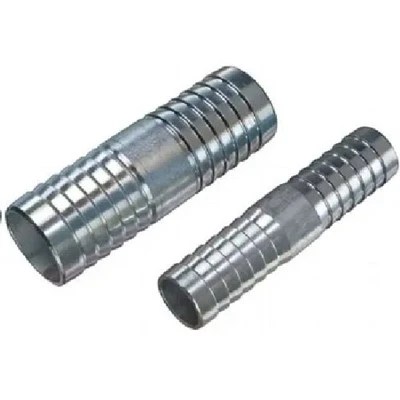
Guillemin Coupling If you’re tired of dealing with parts that don’t fit, fail too often, or hold back your project, we can help. Whether you need a single custom part for a small repair, a prototype for a new product, or a full set of custom components for a large-scale project, our team is ready to work with you to find the right solution. We prioritize quality, speed, and transparency, so you never have to wonder what you’re getting or how long it will take. Just reach out to start a conversation, and let’s figure out how custom hardware can solve your specific problem.
References
- Kalpakjian, S., & Schmid, S. R. (2020). Manufacturing Processes for Engineering Materials (7th ed.). Pearson Education.
- Gordon, J. E. (1978). Structures: Or Why Things Don’t Fall Down. Da Capo Press.
- American Society of Mechanical Engineers. (2021). ASME Y14.5-2021: Dimensioning and Tolerancing. ASME International.
Suzhou Fuyikang Metal Industrial Co., Ltd.
As one of the most professional custom hardware manufacturers and suppliers in China, we have world-leading production equipment and strong manufacturing capabilities. We warmly welcome you to buy bulk high quality custom hardware for sale here from our factory.
Address: No.26.Mudong Rd,Mudu Town, Wuzhong Distric, Suzhou City,Jiangsu Province,China
E-mail: SZFYK@SZFUYIKANG-COUPLING.COM
WebSite: https://www.fyk-coupling.com/
